
Oura Ring vs. Ultrahuman Ring Air – Which Smart Ring Fits Your Lifestyle?
Smart rings have quietly entered their moment. For people who care about sleep, stress, and metabolic (and immune) resilience—but don’t want a chunky smartwatch or high EMF exposure—they make a lot of sense. Two of the best are the Oura Ring Gen 4 and the Ultrahuman Ring Air. I’ve been testing these rings out for the purpose of this review; wearing them both simultaneously for the last few weeks.
If you want the short version upfront:
If you’re someone who gets easily cognitively overloaded, or you just prefer a clean, distilled, “tell me what matters most” experience, Oura will feel like home (even with the subscription which increases longterm cost).
If you love extra data, enjoy tinkering, or refuse to pay for a broad-sweeping subscription you don’t fully use, Ultrahuman is your ring.
If you want the deeper take—keep reading.
Design & Wearability
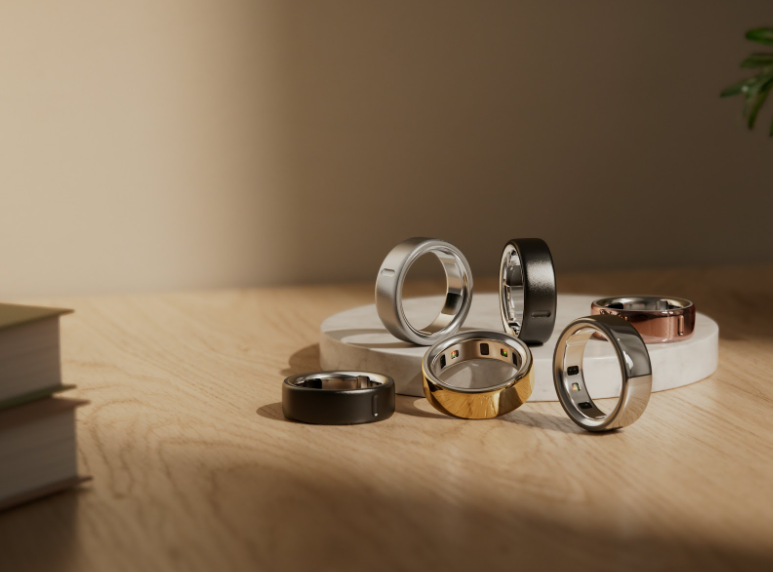
Both rings look like jewelry (not medical devices), which is the point. They’re titanium, lightweight, and come in similar finishes.
Oura Gen 4: 3.3–5.2g | 2.8mm thick | beveled edge
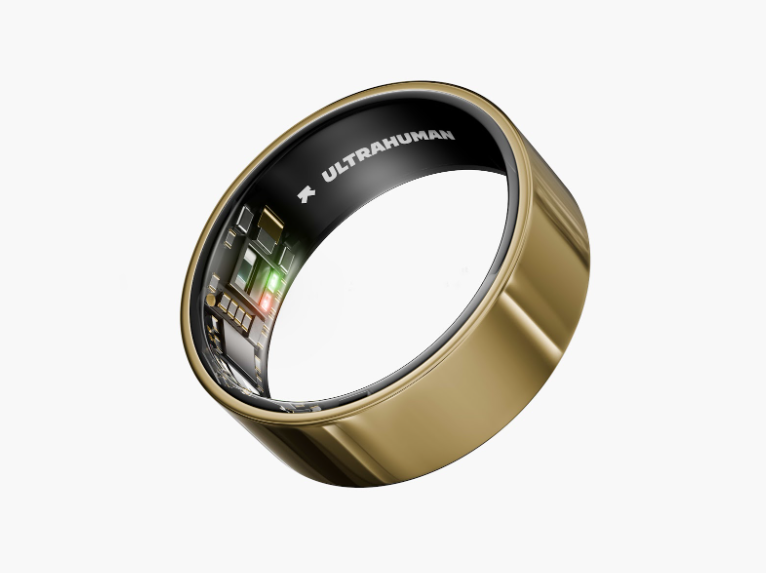
Clean look, great for daily wear, sizes 4–15. Some people report the gold scuffs more easily.Ultrahuman Ring Air: 2.4–3.6g | 2.45–2.8mm thick | wider (8.1mm) with squared edges
Coated in tungsten carbide for legit scratch resistance. Hypoallergenic resin interior. Sizes 5–14.
Real-world difference:
Ultrahuman is technically lighter and thinner, but the wider profile means you notice it more on clothes or tighter pockets. Oura feels more “set it and forget it.”
What They Actually Track
Both rings monitor:
HR + HRV
Sleep + sleep stages
Temperature
SpO2
Stress signals
Activity (passive detection)
But they diverge in how they interpret data and what they prioritize.
Oura Ring Gen 4
Oura leans holistic and recovery-oriented:
Readiness, Sleep, Activity scores
Daytime stress + resilience
Illness detection
Cardiovascular Age + Cardio Capacity
Automatic activity detection
Natural Cycles integration for cycle/ovulation
The women’s health piece is one of the strongest, and the data feels more “digestible” for the average brain.
Ultrahuman Ring Air
Ultrahuman leans biohacker + optimization:
Dynamic Recovery (real-time)
Continuous HRV
Stress Rhythm
Circadian Alignment
AFib screening (night)
Screentime tolerance (funny but surprisingly accurate)
Caffeine window
Vitamin D alerts
Optional “PowerPlugs” like ovulation + weight management via CGM
Key personality difference:
Oura gives you a calm, aggregated interpretation of your physiology.
Ultrahuman gives you knobs to turn and variables to tweak. I definitely found it took some adjustment getting used to the UltraHuman interface. But, once I’d become accustomed to it, I found the additional data useful for my goals. I added the pregnancy and Vitamin D plug-ins (these were free). Surprisingly, I wasn’t offended by the guide to optimizing my caffeine window either!
For those in the USA, UltraHuman provides the option of home bloodtesting; integrating this information into your daily read outs and suggestions.
Additionally, one could purchase their glucose monitoring or home air and EMF monitoring devices.
Accuracy-wise: early testing suggests Ultrahuman catches micro shifts in HR/HRV during activity slightly better, while Oura is incredibly consistent on recovery + illness cues.
Battery Life
This actually matters more than you’d think, because when a ring needs charging, you lose sleep and HRV data.
Oura: 7–8 days on a charge, ~1 hr to top up (when ring is still new)
Ultrahuman: 4–6 days, 1-2 hrs to charge (when ring is still new)
Technology and Sensors
The Oura Ring (Gen 3 or 4) and Ultrahuman Ring Air use pretty similar PPG, temperature, and motion sensors to track heart rate, HRV, sleep stages, and more. Similar to the point that I suspect it won’t matter for most people. That said, there are differences in algorithms, sensor optimization (like Oura’s dynamic Smart Sensing), and data interpretation that cause discrepancies particular in sleep scores. I noticed I would average a 10 point difference daily between the two rings when it came to my sleep scores.
Oura often provides more consistent, clinically validated results, with stricter criteria that penalize factors like late bedtimes, brief wake-ups, or poor timing, sometimes resulting in lower scores and underreported restorative stages. Ultrahuman tends to be more lenient in session detection (e.g., including wind-down time or fewer awake interruptions), weights deep/REM sleep more generously, and integrates lifestyle factors optimistically, which can lead to higher total sleep time and scores. A 10-point gap doesn’t necessarily mean one is definitively wrong—both are estimates influenced by fit, movement, and individual physiology—so my suggestion would be to prioritize how you feel subjectively. Personally, I resonate more with the sleep scores produced by the Oura Ring knowing my body and how sensitive it is to sleep disruption.
Price + Subscription Model
Here’s where the philosophies really diverge.
Oura: $349–$499 + subscription ($5.99/mo or $69/yr)
Ultrahuman: $349, no required subscription
Optional micro-subscriptions for specific features.
For some people, the subscription is a dealbreaker. For others, the sub is what keeps the experience organized and useful.
App Experience
The app makes or breaks these rings.
Oura: clean, minimalist, calming. It makes sense immediately.
Ultrahuman: more technical, more dashboards, more knobs to tweak. The data lovers thrive here; the easily overstimulated do not.
Honestly, the app experience is what made me feel so strongly about who each ring is for.
So—Which Should You Pick?
Choose Oura Ring Gen 4 if:
✔ recovery and sleep are your primary goals
✔ you prefer a calm, guided interface
✔ cycle tracking matters to you
✔ you get overwhelmed by raw data
✔ battery life matters
✔ you’re okay with subscriptions
Choose Ultrahuman Ring Air if:
✔ you hate subscriptions
✔ you’re biohack-inclined and enjoy experimentation
✔ AFib, circadian tools, and tech-y metrics excite you
✔ you want more metabolic or wearable stack integration (e.g., CGM)
✔ you want the lightest wearable possible
Both are excellent, both are low EMF compared to watches, and both are good replacements for people who dislike being constantly “pinged” by a smartwatch.
Final Thoughts
The best ring isn’t the one with the most features—it’s the one that fits your brain and your tolerance for input. Cognitive load, energy, and overwhelm matter just as much as accuracy and metrics.
If you’ve tried either, I genuinely want to know your experience—especially if you switched between the two.
Discount Code:
UltraHuman did provide us a discount code that gets you at least 10% off the price of a new ring: ULTRAMMM10
A few notes on how I personally use the rings to improve my health
For myself, it’s not just about the day to day scores and prompts, but the longterm patterning. I’ve been using the Oura Ring for 5-6 years now and as such have data over weeks, months and years. I compare my sleep scores, HRV, recovery and resilience to longerterm health strategies I’m trialling as well as to my labs. For example, due to my pregnancy I became very anemic in August and September hitting an all time high for stress markers in September. I started going for regular IV’s (in addition to supportive supplements); alternating iron and modified Meyer’s cocktails resulting in a return to peak scores by December. What does this tell us? It tells us that anemia has widespread effects beyond just making us fatigued. Exactly the type of lessons i’m looking for. I’ve written about the impact of anemia and subsequent low oxygen tension on the nervous system on our instagram page if you’d like to learn more.
